July 2026 | Central Park | Carriage Horses | Horse Welfare
NYC Carriage Horses Need Paddocks, Not a Pink Slip
A Working Horseman’s Fix for Central Park’s Carriage Horses — and Proof New York Can Actually Care for Them
Before you post another “ban the carriage horses” take, hear this from someone who’s spent a lifetime around horses and a lot of years in New York City.
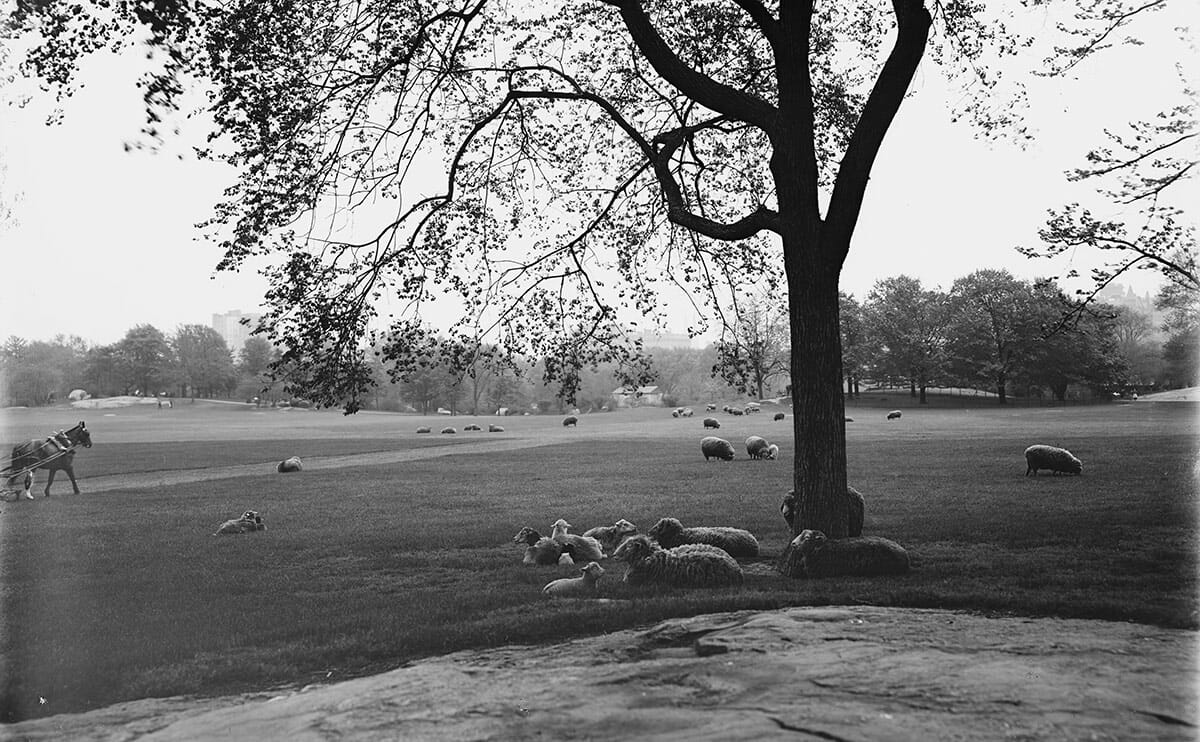
Sheep grazing in Sheep Meadow, decades before the lawn was anything but a pasture.
Photo and story via Modern Farmer — “When Sheep Ruled Central Park”.
I’ve owned and driven horses since I was a kid — some for riding, some for driving — and I lived in Manhattan for decades. I never drove the Central Park carriage horses myself, but I’ve watched them for years and slipped more than a few of them an apple on my way past. That’s given me a pretty clear-eyed view of what’s actually wrong here, and it isn’t what people think.
The problem was never the traffic. The real problem is that a horse standing on pavement between fares doesn’t get what every horse needs to actually be a horse: turnout, grass under its feet, other horses to be a herd with, and time off the clock. That’s a management failure, not a reason to end the job.
Nobody wants to hear this one because it requires effort instead of outrage — but it’s not complicated.
- 🐑Turn Sheep Meadow back into what it was actually built to be. It was designed as grazing ground before Olmsted’s landscape architecture “vision” got precious about it — a real flock grazed there for seventy years before anyone decided lawn chairs mattered more.
- 📌Put paddocks back. License the carriage operators with a requirement — horses turned out four or five days a week, three or four hours at a stretch, in full public view.
- 🍅Let people bring an apple, a carrot. Watch a horse actually be a horse instead of a prop.
- 🔨Add a working farrier shop or a vet care unit on-site. Sturbridge Village figured this out generations ago.
- 🏪Let Central Park Conservancy sponsor it as living history. Horses and carriages were part of Olmsted’s park from day one.
Where the name actually comes from: Sheep Meadow isn’t a nostalgic nickname — a real flock of pedigreed Southdown and Dorset sheep grazed those 15 acres from 1864 until 1934. Olmsted and Vaux brought them in on purpose: partly for the romantic English-countryside look they wanted, and partly because a flock of sheep is a genuinely efficient way to keep a lawn mowed and fertilized without machinery. Grazing animals on that lawn isn’t a break from the original design. It is the original design.
More on the sheep The photo up top, and the full story of the Sheepfold building where the flock lived — now the site of Tavern on the Green — comes from “When Sheep Ruled Central Park,” Modern Farmer.
Vision, selectively applied When I floated this to someone supposedly influential at the Conservancy, I was told it “wasn’t Olmsted’s vision.” Funny — I don’t recall welded wire fencing being in his vision either, and that’s all over the park. Vision arguments only get invoked when they’re convenient.
Most of the outrage driving this comes from people who’ve never driven a horse, much less stood near one for anything more than a photo from a safe distance. They haven’t done the research. They haven’t thought about it beyond reading one article and feeling the appropriate amount of horrified. So do the work before you post the take: educate yourself, read something, start with the history. Horses were part of this land before it was even Central Park — long before Olmsted ever put pen to paper on the design.
Understand what you’re actually asking for when you say “just stop.” A horse without a job doesn’t get a nice retirement in a green field. It gets a number and a truck ride to a kill pen in Texas or points west, and the name on the other end of that road is Alpo. You’re not saving horses. You’re erasing their reason to exist to anyone who’d otherwise pay to keep them alive.
I’ll tell you what an actual working horse looks like: when I pull the marathon cart out at the farm, my five-year-old Haflinger loses his mind with excitement, because a run in harness is one of his favorite parts of his week. Don’t tell me horses don’t enjoy the work. Mine does. Give them turnout, give them care, and let them do the job they’re built for.
One More Thing — Since I’m Apparently Not Done Being Difficult About This
-
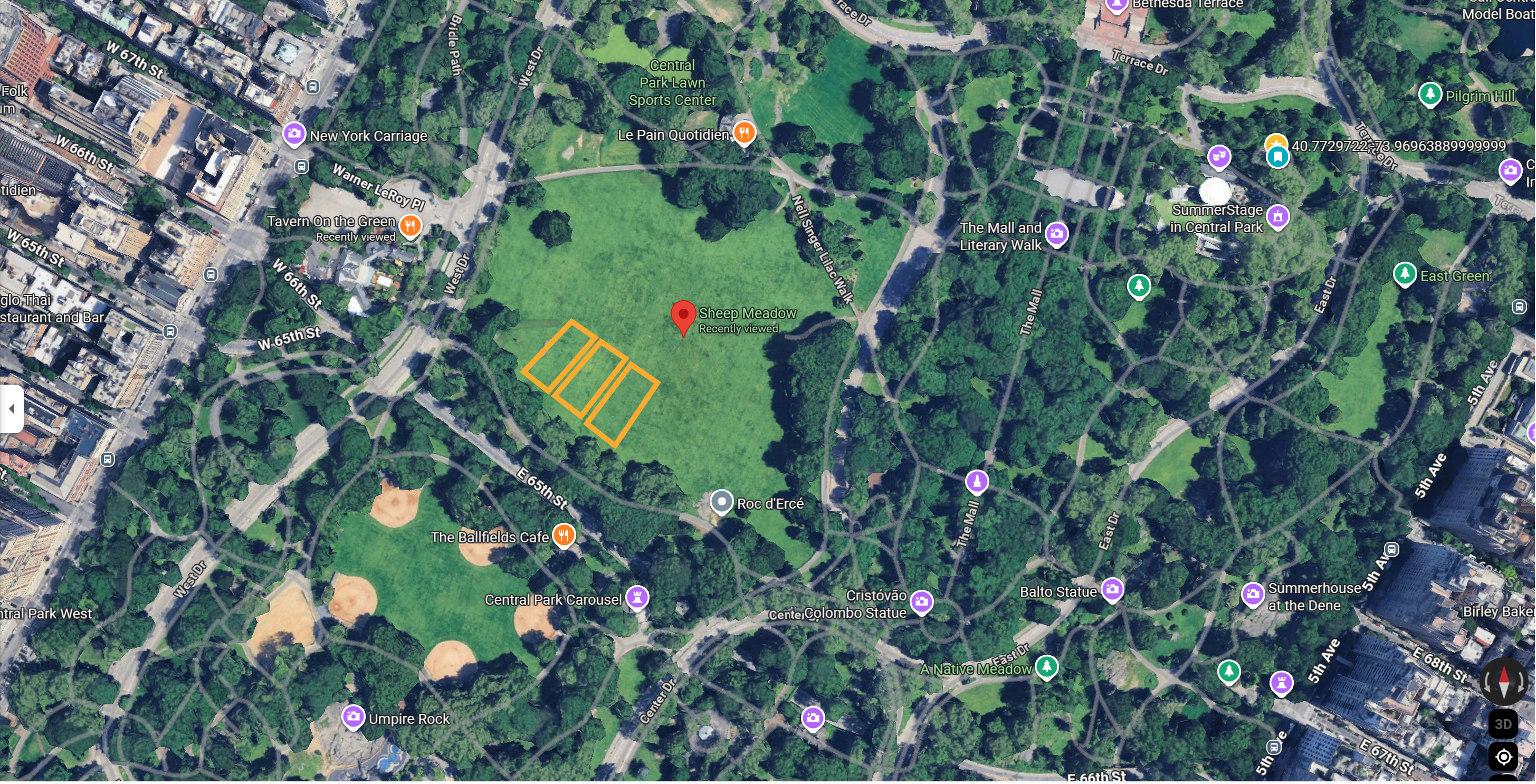 Sheep MeadowDesigned as grazing land before it was ever a lawn — sheep grazed here until the early 1930s. Outline shows one possible paddock footprint along the perimeter.
Look at them before you decide there’s “nowhere to put them.” There’s plenty of room. What’s missing is the will.
-
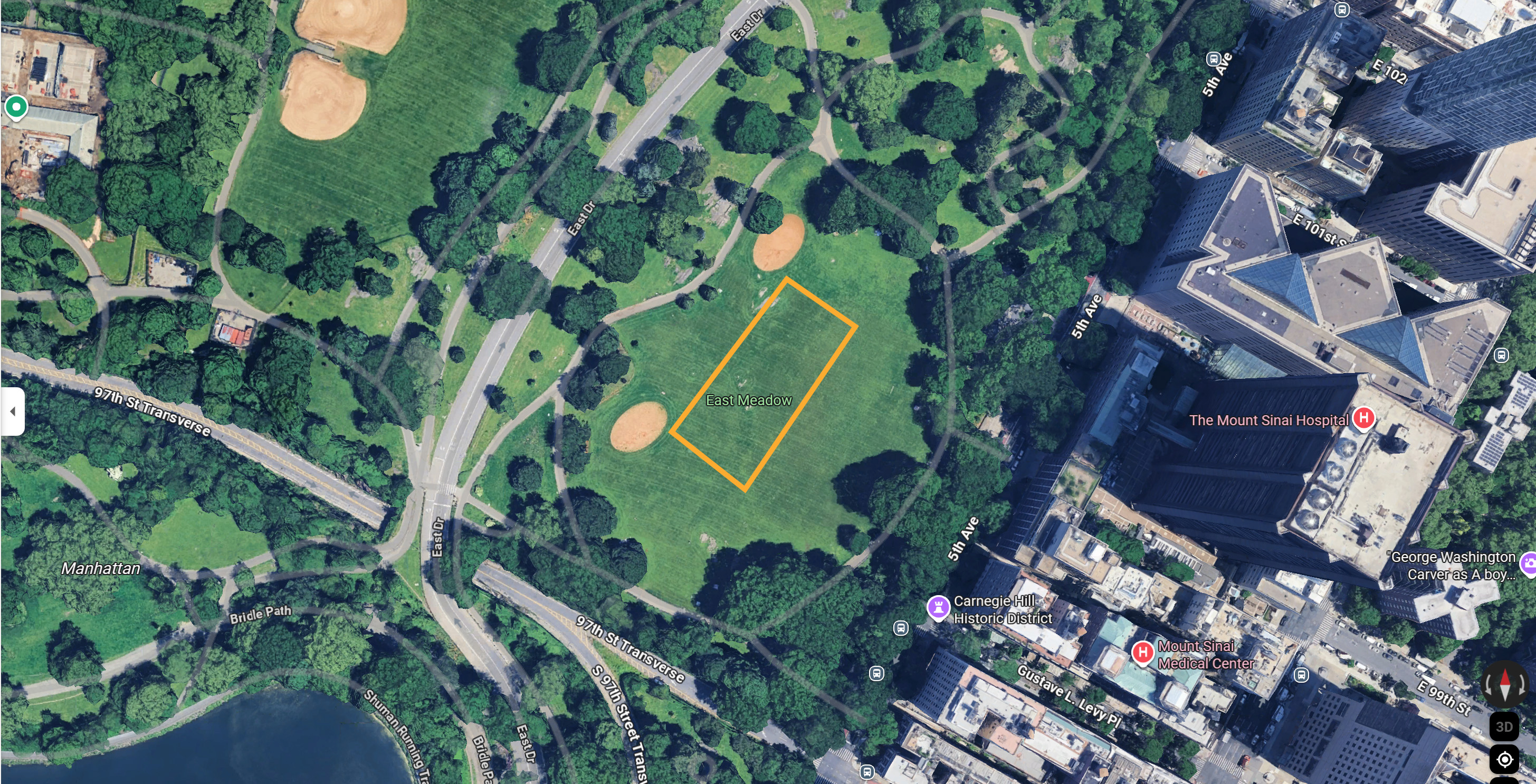 East MeadowOpen turf on the park’s east side, well clear of the drive loop — room for turnout without competing with the Great Lawn crowds.
 -
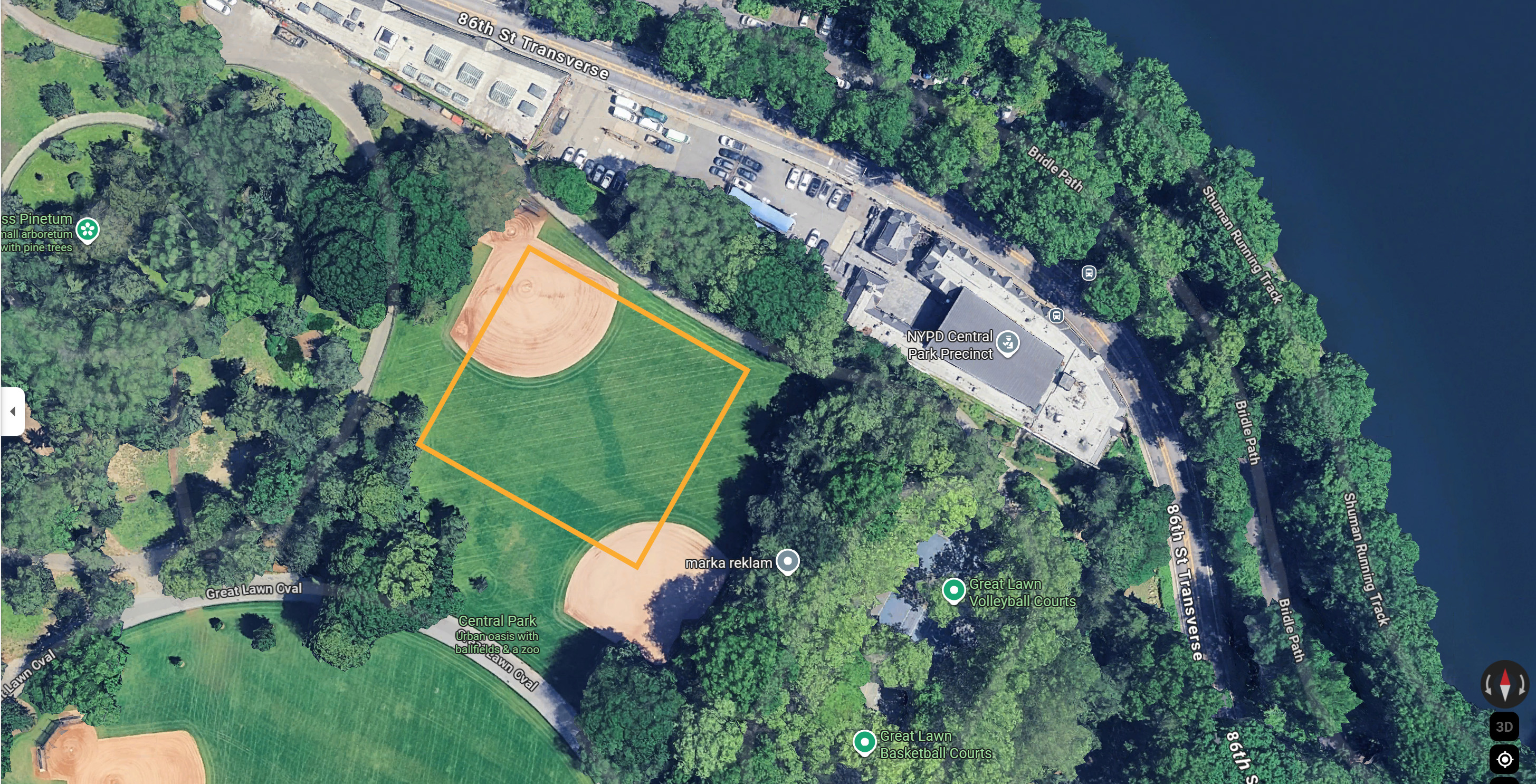 Transverse BallfieldsTwo of nine fields, reimagined. A modest trade of diamonds for a herd that’s in public view every day, not just during a game.
 -
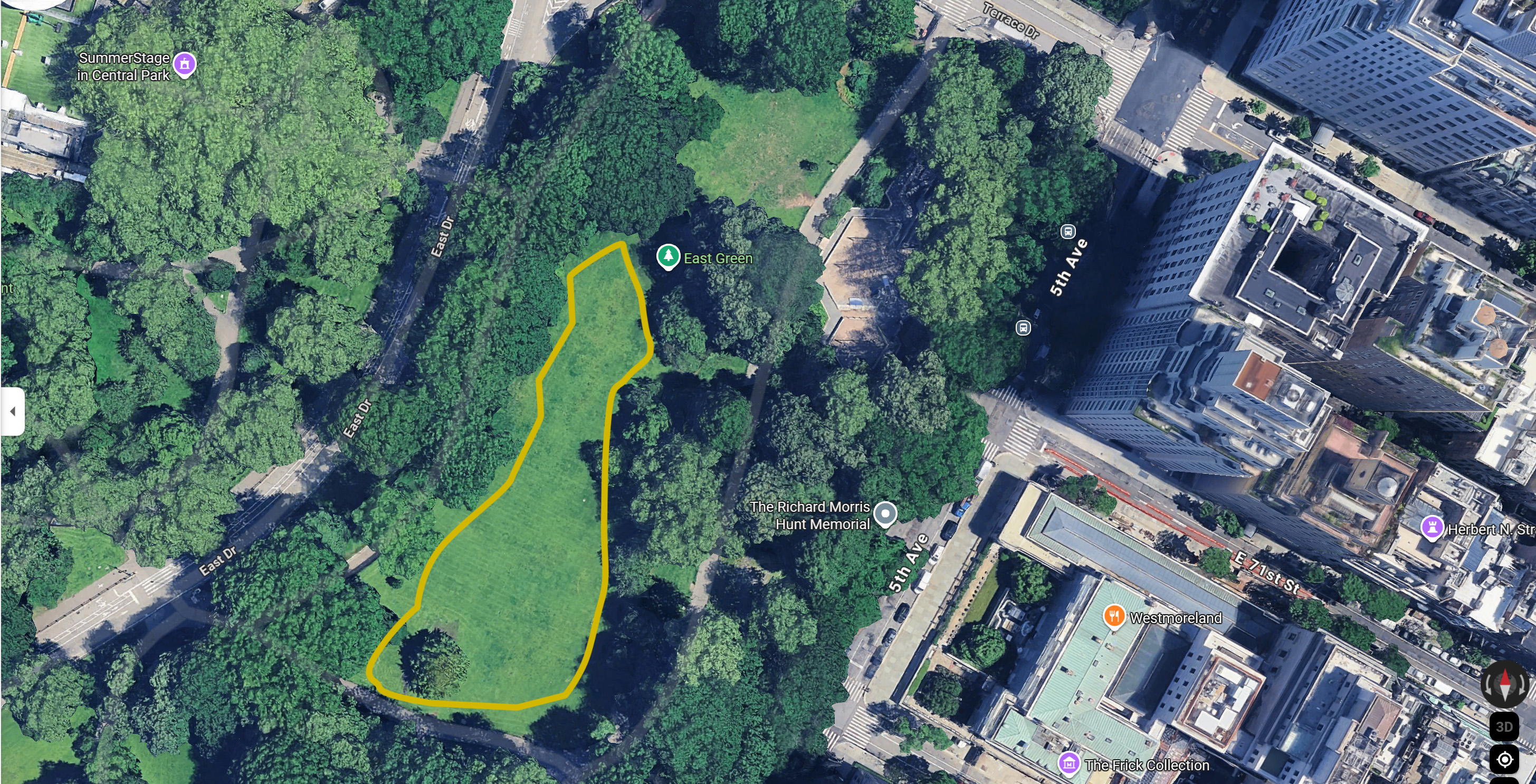 East Green — the favoriteWhere Dr. Henry Chase, longtime secretary of the National Horse Show, once proposed a horse show back in the mid-1980s. The idea was right then. It still is.
Sheep Meadow isn’t the only option, and honestly it might not even be the best one. Central Park has real estate for this if anyone’s willing to look at it as land instead of scenery. East Meadow could take a paddock. So could two of those baseball fields in the transverse — do we genuinely need nine ballfields in that park, or would four horses standing in grass do more for the city’s soul than two more empty diamonds most of the year?
And if I’m picking a favorite, it’s the East Green. Back in the mid-’80s, Dr. Henry Chase — who spent years as secretary of the National Horse Show — floated the idea of putting a horse show there. Nobody built it. But the bones of the idea were right then and they’re right now: that’s a space built for exactly this, sitting unused for it.
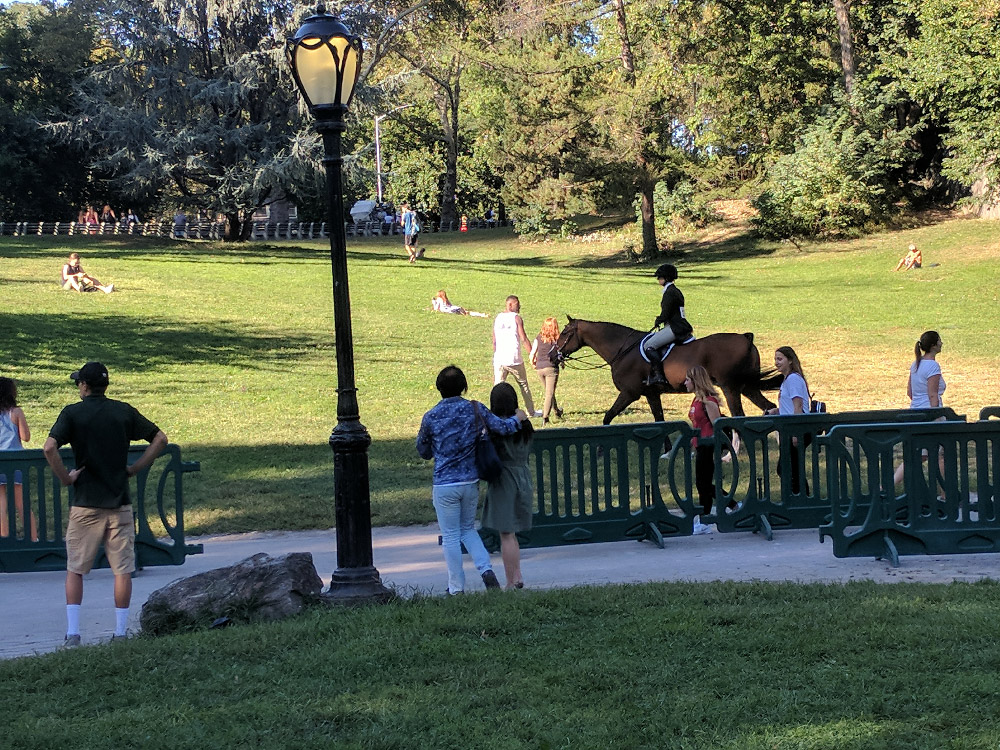
A Sideline on Dr. Chase Henry was a friend. Years ago I gave him riding lessons, right there in Central Park. Outside of his day job as a Manhattan dentist — Yale, then Harvard’s dental school — he was a fixture of the New York horse world: a breeder and exhibitor whose horses, Bongo Drum and Signed Piece among them, racked up championships on the local hunter circuit, and a trustee and longtime secretary of the National Horse Show. He passed away in 1988 at 64. The East Green idea was his long before it was mine — I’m just the one still pushing it.
To Thomas L. Kempner Jr., Chairman of the Board of the Central Park Conservancy: the “not Olmsted’s vision” answer isn’t good enough when welded wire fencing already isn’t Olmsted’s vision either. Put the paddock proposal on the Board’s agenda. Living history didn’t stop being living history because it’s inconvenient to schedule.
To Mayor Zohran Mamdani: this is squarely a City Hall and NYC Parks question — carriage licensing, park use, and animal welfare all run through your administration. A turnout requirement costs far less than a ban costs the horses. I’d welcome the chance to show you exactly where the paddocks would go.
#RightToFarm #CarriageHorses #CentralPark #HorseWelfare #MusicWoodsFarm #SheepMeadow #EastGreen #ThomasKempner #CentralParkConservancy #MayorMamdani #NYCParks
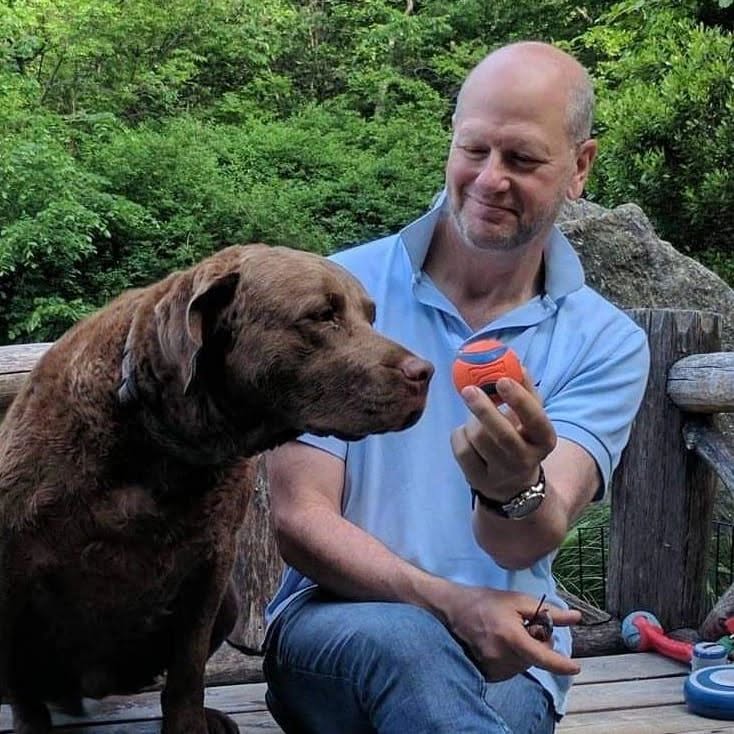
About the Author
William Drescher owns and operates Musicwoods Farm, a 213-acre working farm in Lanesborough, Massachusetts. He rode show jumpers professionally into his 30s, then worked in network broadcast news and sports for close to 40 years as an art director. In 2003 he co-owned the NY-bred racehorse Willfulness, and retrained him for a second career after racing. Dog behavioral training has always been just as much a part of his life as horses — he now runs Troubles Behind Me Canine Training, and lived for decades in Manhattan before returning to steward the family farm.
— William Drescher
Musicwoods Farm · Lanesborough, MA ·
musicwoods.farm

© 2023 wmdrescher